
1932 Pietenpol Air Camper
Tour the Cockpit!
Front Cockpit View
Rear Cockpit View
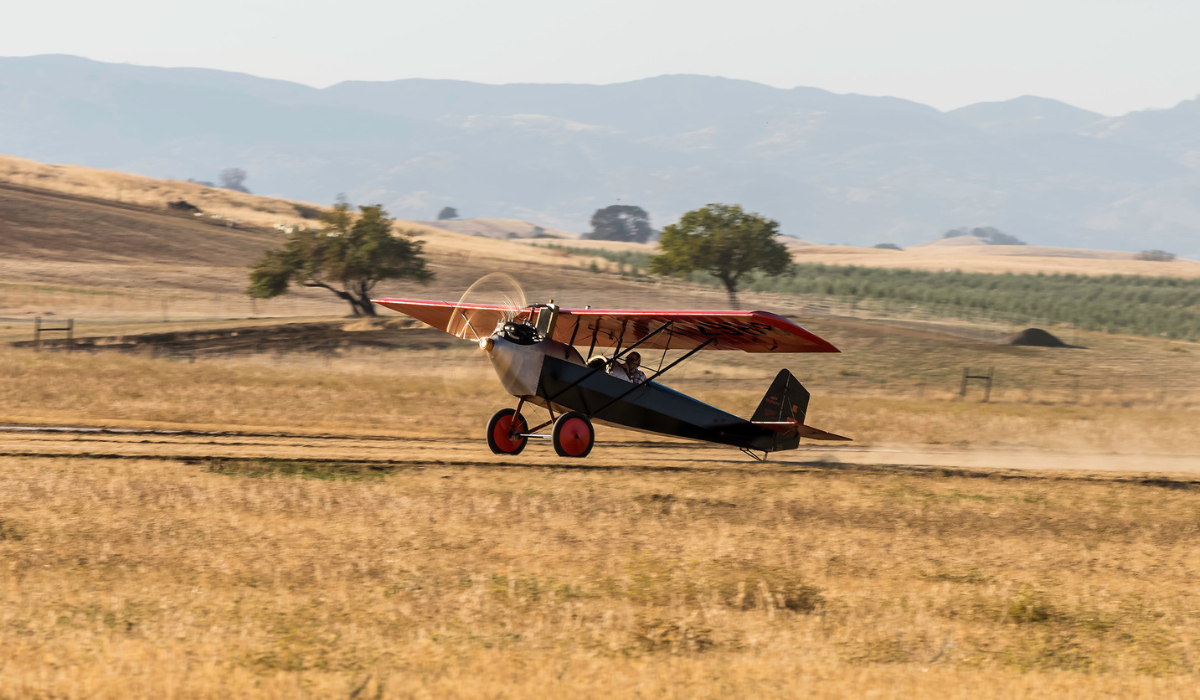
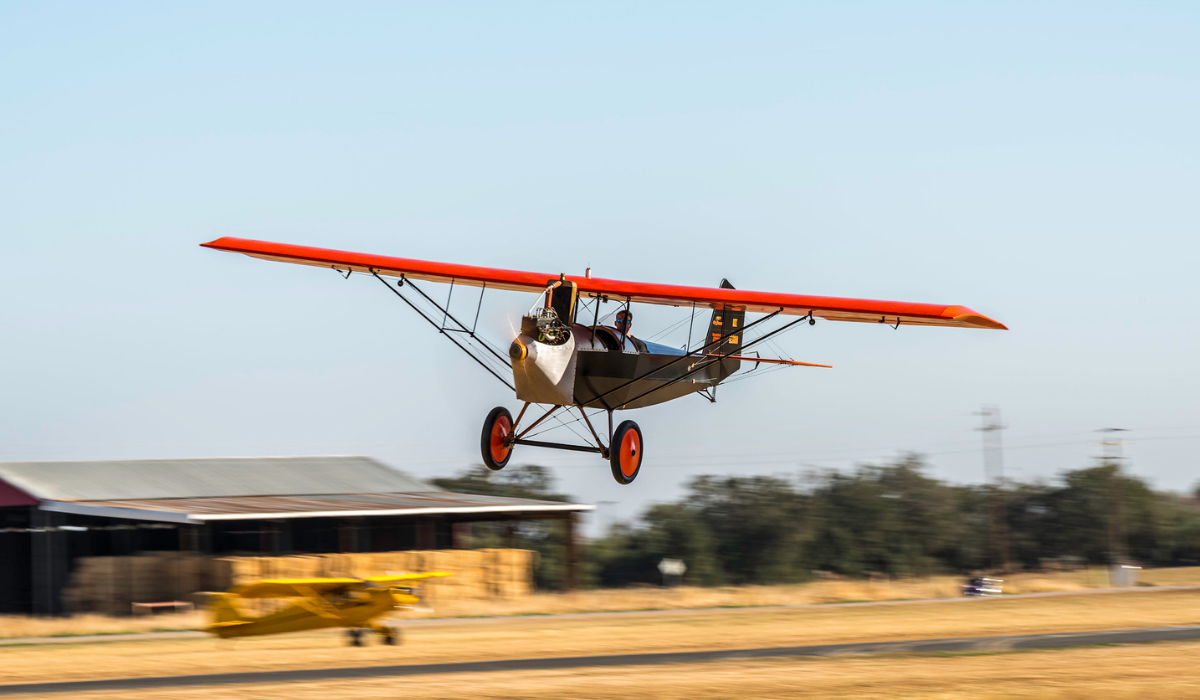
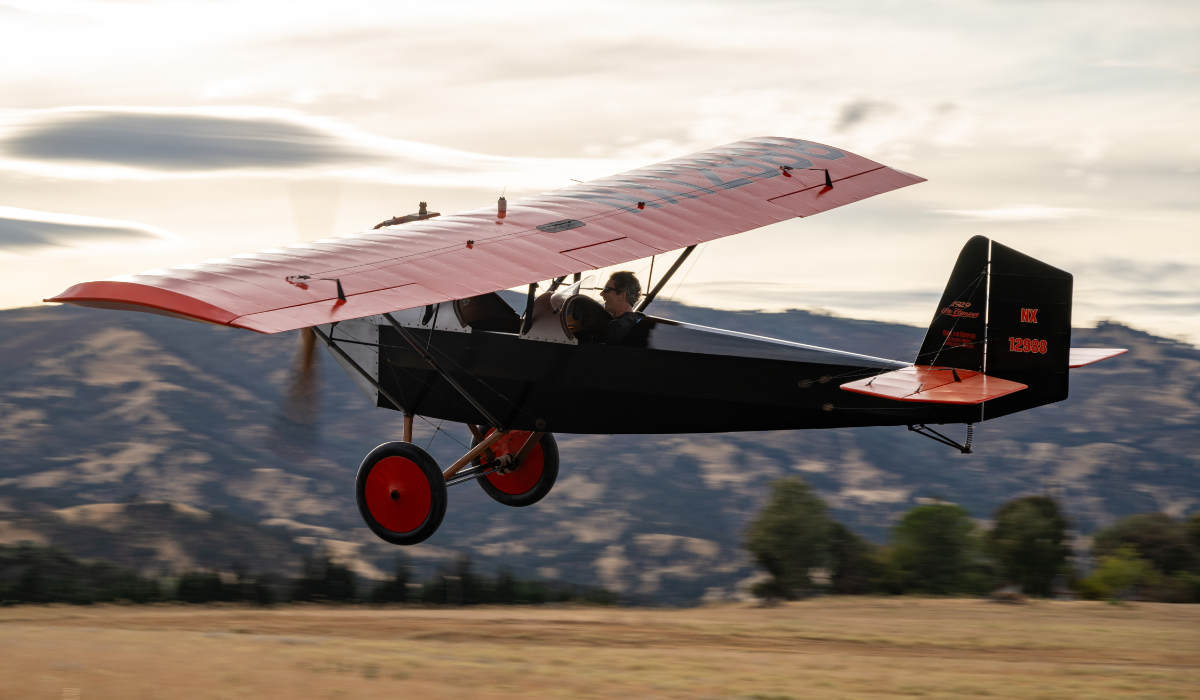
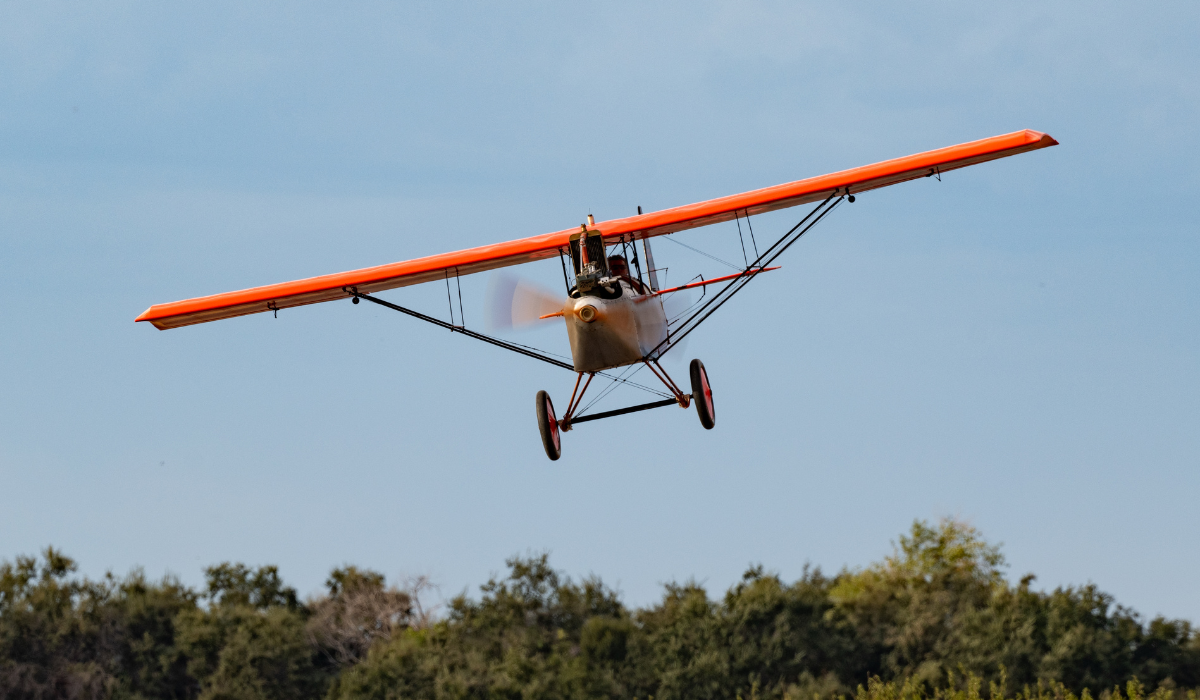
Bernard Pietenpol was born in 1901 and his family eventually settled in the southern Minnesota community of Cherry Grove. Bernard’s father’s general store still stands as one of the few original stores in town. From the beginning, Bernard showed an aptitude for all things mechanical and became the town’s “mechanical genius”, building powered lawn mowers, tractors, and wheel chairs for needy residents, as well as a gas-powered electric generator. Like many mechanically inclined young men of his generation, Bernard built his share of motorcycles and automobiles. Also like many of his era, Bernard was intrigued by the relativity new “flying machines” that had gained notoriety and a fair amount of acceptance after WWI.
But flying was expensive, even with all the war surplus Jenny and Standards on the market. The average small-town enthusiast had a hard time coming up with the cash to maintain an airplane, let alone buy one. So Bernard Pietenpol, with an eighth grade education, took it upon himself to build an airplane and teach himself how to fly. Bernard was convinced that airplanes could be powered by automotive engines, much cheaper and more available than the expensive “certified” aircraft engines.
With the help of his father-in-law W.J. Krueger, a wood craftsman, and two friends, Don Finke and Orrin Hoopman, Bernard Pietenpol began experimenting with various wing and fuselage designs, as well as engines to power them. There was a lot of trial and error as Bernard searched for the right combination, always keeping mind that he wanted to develop an airplane that anyone could afford, construct and enjoy without the large expense of factory-supplied special parts or complex construction methods.
Their first attempt, in 1920, was a small biplane on the front of which they bolted a Ford Model T engine – very cheap and plentiful in those days. Without much alteration, the engine could develop about 20 horsepower on its best day, and the prototype could not have been called a success. Bernard confessed later, “It would have flown if I’d had known how to fly it. Luckily I didn’t.” Not only did Pietenpol want an airplane that was easy to construct, it had to be reasonably easy to fly, since many of those who he envisioned flying his airplane would be, like him, novices when it came to piloting skills.
His second project was a similar biplane design using a rotary Gnome engine. This was a step up from the Model T and had a proven track record used by early birdmen like Bleriot in his English Channel crossing (and, later, women like Harriet Quimby). The Gnome generated 50 horsepower, a great improvement, but it also had its drawbacks, like a horrible screeching sound and propensity for catching fire at awkward moments. After extensive tests, Pietenpol, not pleased with the results, called the Gnome a “growler,” and it likely never flew.
He decided to try another tactic and bought plans for a Lincoln Sport Biplane from a popular magazine called Modern Mechanics and Inventions Flying Manual published by Fawcett and whose popular aviation writer, E. Weston “Westy” Farmer, was influential in covering the world of “homebuilt aircraft.” By now it was the late 1920s and successful designs like Edward Heath’s Parasol and O.C. Corben’s Baby Ace were being built both as finished aircraft and in kit form by their companies, and plans were being sold to those confident in their abilities as craftsmen. But these designs required some complex construction skills and equipment to manufacture welds or fabricate intricate control mechanisms that were beyond the scope of the average builder. Of course, these parts could be purchased separately by mail, a practice Pietenpol eventually offered for his own designs as well. But the Heath and Corben models also mainly recommended aircraft powerplants which were less available and much more expensive (though each manufacturer did offer plans for using motorcycle engines). Unlike Pietenpol, experimental aircraft designers thought that automobile engines were simply too underpowered. Aviation was still in its infancy in America.
It was about this time that a young man named Lindbergh flew alone across the Atlantic Ocean inspiring a whole new awakening to the fun, adventure, and romance of aviation. Bernard Pietenpol knew that he had to find some kind of aircraft in which he could gain a bit more flying experience as he kept his dream alive of creating his own design for the “common man.”
Pietenpol was not pleased with the overall performance of the Lincoln, so he traded it for a Curtiss Jenny powered by the famous OX-5 water-cooled engine. This was the airplane used by most of the barnstormers who had criss-crossed the Midwest during the decade following World War I and which most observers used as their “yardstick” for comparing the smaller homebuilt airplanes. Bernard logged some hours in the Jenny, but he later admitted that he wasn’t very fond of its quirks, both in the airframe design and its temperamental underpowered V-8 engine. Meanwhile, Ed Heath’s Parasol was becoming more popular, as well as the kits he sold to builders. If Heath could do it, Bernard reasoned, why couldn’t he?
He sold the Jenny and went back to his first instincts, designing and building his own airplane, but, unlike Heath and Corben, designing his airframe around an automobile engine. Bernard Pietenpol sketched up his aircraft design, and with woodworking help from his father-in-law, he and Finke put their workmanship skills together while Hoopman created the post design sketches, later to be transformed into blueprints for sale.
Bernard Pietenpol’s new design, dubbed “ACE,” was a “parasol” type construction – a 27-foot one-piece (initially) high wing placed well above the fuselage, similar to Heath’s Parasol (produced in his Chicago factory). But unlike the welded tube construction of Heath, Bernard preferred all-wood construction, so the average woodworker could construct his airplane with “usual” skills, which did not include welding. (He later offered a steel tube fuselage version of the aircraft as an option.)
Bernard Pietenpol moved his workshop into an abandoned Lutheran church in Cherry Grove, MN and worked tirelessly. Finally, on September 1st, 1927, Bernard and Don Finke successes fully flew their new design. It was powered by an aluminum 16-value Model T engine (ironically called “the Ace” conversion) developed by Horace Keane. At 30 horsepower, it was capable of getting two men into the air and safely back on the ground. It was a step in the right direction, but still Bernard believed it needed additional power.
By now Henry Ford had come out with his new car, the Model A, powered by a bigger four cylinder engine. At an estimated 40 horsepower, this engine seemed just the thing for Bernard Pietenpol’s new aircraft design’s needs, and having been on the market for several years, junk yards were starting to get as many of them as Model T engines.
So Bernard Pietenpol went to work converting the Ford Model A engine for his new monoplane. In May 1929 Bernard Pietenpol test flew his Air Camper with the new engine. It was a complete success – a perfect match of airframe to power plant. Conversion of the Model A engine was a bit more extensive than had been necessary for the Model T, but Bernard included extensive and clear instructions in his building manual, also offering parts for sale to those builders who did not have the skills or equipment to make the conversions such as aftermarket magnetos, a shorter water pump, carburetor heat piping, and exhaust stacks. Or, a buyer could purchase a “ready-to-fly” Model A powered Air Camper for $750.




Bernard Pietenpol’s big break occurred in 1930 when aviation editor “Westy” Farmer attended a fly-in in Minneapolis, Mn. In previous columns in Modern Mechanics and Inventions Flying Manual, Farmer had declared that he was not a big fan of using automotive engines in aircraft and specifically said that Ford’s Model A engine was not usable at all. Pietenpol decided to make the flight in his Air Camper up to Minneapolis to prove the editor wrong. In fact he had Finke fly a second Model A powered airship to the fly-in. Once face-to-face with Farmer, Pietenpol told the crowd, “I believe that this is the safest plane for the beginner that has ever been built.” He made such an impression on Farmer, and the rest of the crowd, that Modern Mechanics and Inventions Flying Manual published his Air Camper plans serialized in four 1931 issues. That really put Bernard Pietenpol, the Air Camper, and Cherry Grove on the aviation map. Letters arrived in bunches.
Bernard Pietenpol offered fatherly advice to his customers. For example: “If you realize that you are not capable of building a good ship, then do not try. Either buy a ship or have someone build it for you that can. Don’t build an unsafe ship.”
He also had his views about aircraft safety when it came to flying. “I do not believe in stunting, it is the cause of nearly all accidents. I believe in safe and sane flying only. My advice is, do not stunt much or take unnecessary chances.”
Unlike some of his fellow homebuilt pioneers, Bernard Pietenpol actually built very few airplanes at his Minnesota airfield/worksite, perhaps only 23. Like aircraft designer Burt Rutan decades later, Bernard Pietenpol made more of a business of providing plans for his designs. During the 1930’s, he sold thousands of sets of plans to eager builders all over the country as well as many overseas. Assembly kits were also available and he sold hundreds of them, along with his availability as a friendly personal “consultant” to any builder’s question, no matter how small. For example: “There is no point in using a lot of nails. The strength lies in the gusset plate and gluing.”
Meanwhile, Bernard Pietenpol was working on a single-seat version of his popular Air Camper. In 1933, he came out with his Sky Scout, which, at under 600 pounds, was lighter than the Air Camper, so one could use the old Model T engine that Pietenpol had originally used in his Air Camper design. Of course, the Sky Scout could really scream with the Model A engine. Orrin Hoopman not only drew all the plans for the Air Camper and Sky Scout, but also bought the first one built. With a top speed of 62 mph and cruise of 55, the new single seater could take off in about 150 feet and land in 250.
Sky Scout plans were published in the 1933 edition of Modern Mechanics and Inventions Flying Manual. Pietenpol Air Campers and Sky Scouts drew great crowds at fly-ins. Always the enthusiastic promoter of flying for everyone, Bernard Pietenpol offered rides to the public in nearby communities on Sunday afternoons, insisting that all his pilots wear white shirts and ties. Bernard said, ” I built the Sky Scout to prove to myself that I could build a ship powered with a motor which would be practical, and also prove that the Model A engine was not the only automobile motor that would fly successfully.”
Bernard Pietenpol kept experimenting with new powerplants. He even beefed up the Air Camper’s wing area on one model in order to handle the added weight of a V-8 engine. At 80 horsepower, the performance was better than the Model A, but the fuel consumption was also twice as high. He also tried a 60 horsepower Franklin aircraft engine, which was a fair powerplant. By then there were also aluminum cylinder heads available for the Model A which Pietenpol tried and enthusiastically recommended to customers as a relatively inexpensive upgrade. He never stopped looking for ways to improve his airplanes’ performance.
As the years passed, Bernard Pietenpol taught himself how to repair televisions and radios. By 1960, Chevrolet introduced the six cylinder air-cooled Chevrolet Corvair. This would be the last engine Bernard would experiment with in powering his Air Camper. In 1966 Bernard completed his first Corvair powered Air Camper, then another in 1970 which was dubbed “The Last Original”. By then, plans for Pietenpols had been sold all over the world including Canada, England, Europe, Australia, and Africa.
As time went by, the aviation world recognized all the contributions that Bernard Pietenpol had made not just to the homebuilt aircraft industry, but to aviation in general. In 1991 (seven years after his death), Pietenpol was inducted into Minnesota’s Aviation Hall of Fame, and is today nationally recognized as “The Father of the Homebuilt Aircraft”.
(Source: The Pietenpol Family)
This particular airplane was built by the Ala Doble Flying Collection founder Walter Bowe. It permanently resides at the Ala Doble Flying Ranch where it is maintained in flying condition.
1932 Pietenpol Flying Camper
- Registration: 12988
- Serial number: 1
- Capacity: 2
- Empty weight: 610 lb
- Gross weight: 995 lb
- Powerplant: Ford Model A automotive conversion engine – 40 hp
- Performance:
- Maximum speed: 100 mph
- Stall speed: 35 mph
- Rate of climb: 500 ft/min
Dimensions:
- Length: 17 ft 8 in
- Wingspan: 29 ft
- Height: 6 ft 6 in