
1933 Lockheed Vega
The Lockheed Vega is an American five- to seven-seat high-wing monoplane airliner built by the Lockheed Corporation starting in 1927. It became famous for its use by a number of record-breaking pilots who were attracted to its high speed and long range. Amelia Earhart became the first woman to fly solo across the Atlantic Ocean in one, and Wiley Post used his to prove the existence of the jet stream after flying around the world twice.
Design and Development:
Designed by John Knudsen Northrop and Gerald Vultee, both of whom would later form their own companies, the aircraft was originally intended to serve with Lockheed’s own airline routes. They set out to build a four-passenger (plus pilot) aircraft that was not only rugged, but also one of the fastest aircraft of its era. Using a wooden monocoque fuselage, plywood-covered cantilever wings and the best engine available, the Vega delivered on the promise of speed.
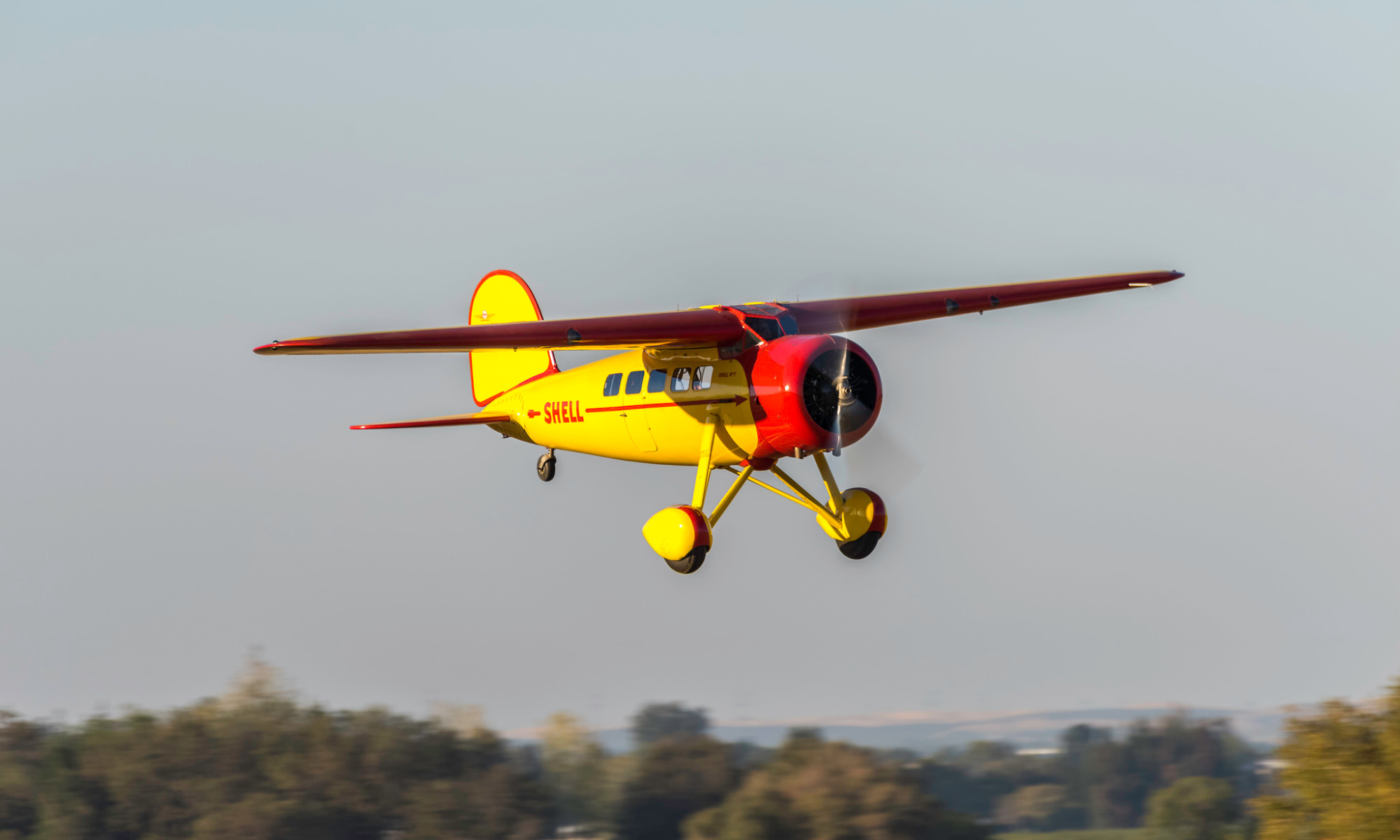
The fuselage was built from sheets of plywood, skinned over wooden ribs. Using a large concrete mold, a single half of the fuselage shell was laminated in sections with glue between each layer and then a rubber bladder was lowered into the mold and inflated with air to compress the lamination into shape against the inside of the mold. The two fuselage halves were then nailed and glued over a separately constructed rib framework. With the fuselage constructed in this fashion, the wing spar couldn’t cut through the fuselage, so the single spar cantilever wing was mounted atop the aircraft. Only the engine and landing gear remained essentially unstreamlined, and on the production versions the undercarriage had teardrop shaped fairings covering the wheels, while only the earliest versions lacked NACA cowlings and had the engine cylinders exposed to the airstream. It was powered by the Wright Whirlwind air-cooled radial engine, which delivered 225 hp.
Operational History
The first Vega 1, named the Golden Eagle, flew from Lockheed’s Los Angeles plant on July 4, 1927. It could cruise at a then-fast 120 mph (190 km/h), and had a top speed of 135 mph (217 km/h). A number of private owners placed orders for the design, and by the end of 1928, 68 had been produced. In the 1929 National Air Races in Cleveland, Ohio, Vegas won every speed award.
In 1928, Vega Yankee Doodle (NX4769) was used to break transcontinental speed records. On August 19–20, Hollywood stunt flier Arthur C. Goebel broke the coast-to-coast record of Russell Maughan by flying from Los Angeles, California, to Garden City, New York, in 18 hours and 58 minutes, in what was also the first nonstop flight from west to east. On October 25, barnstormer and former mail pilot Charles B.D. Collyer broke the nonstop east to west record set in 1923 by the U.S. Army Air Service in 24 hours and 51 minutes. Trying to break the new West-to-East record on November 3, Collyer crashed near Prescott, Arizona, killing him and the aircraft owner, Harry J. Tucker.
Looking to improve the design, Lockheed delivered the Vega 5 in 1929. Adding the Pratt & Whitney R-1340 Wasp engine of 450 hp (340 kW) and a new NACA cowling improved performance enough to allow the addition of two more seats, and increased cruising speed to 155 mph (249 km/h) and top speed to 165 mph (266 km/h). A variant of the Vega 5 was built specifically for private aviation and executive transport as the L.5A “Executive” although the 5 was also used by a many airlines, including Pan American Airlines, Pacific Alaska Airways and Transcontinental and Western Air. A total of 64 Vega 5s were built.
In 1931, the United States Army Air Corps bought two DL-1 Vegas, with the first designated as Y1C-12 and the second, a DL-1B designated as Y1C-17. These both had a formed metal fuselage, while the Y1C-17 had additional fuel tanks in the wings.
The Vega could be difficult to land. In her memoir, Elinor Smith wrote that it had “all the glide potential of a boulder falling off a mountain.”In addition, forward and side visibility from the cockpit was extremely limited; Lane Wallace, a columnist for Flying magazine, wrote that “Even [in level flight], the windscreen would offer a better view of the sky than anything else, which would make it more of a challenge to detect changes in attitude or bank angle. On takeoff or landing, there’d be almost no forward visibility whatsoever.”
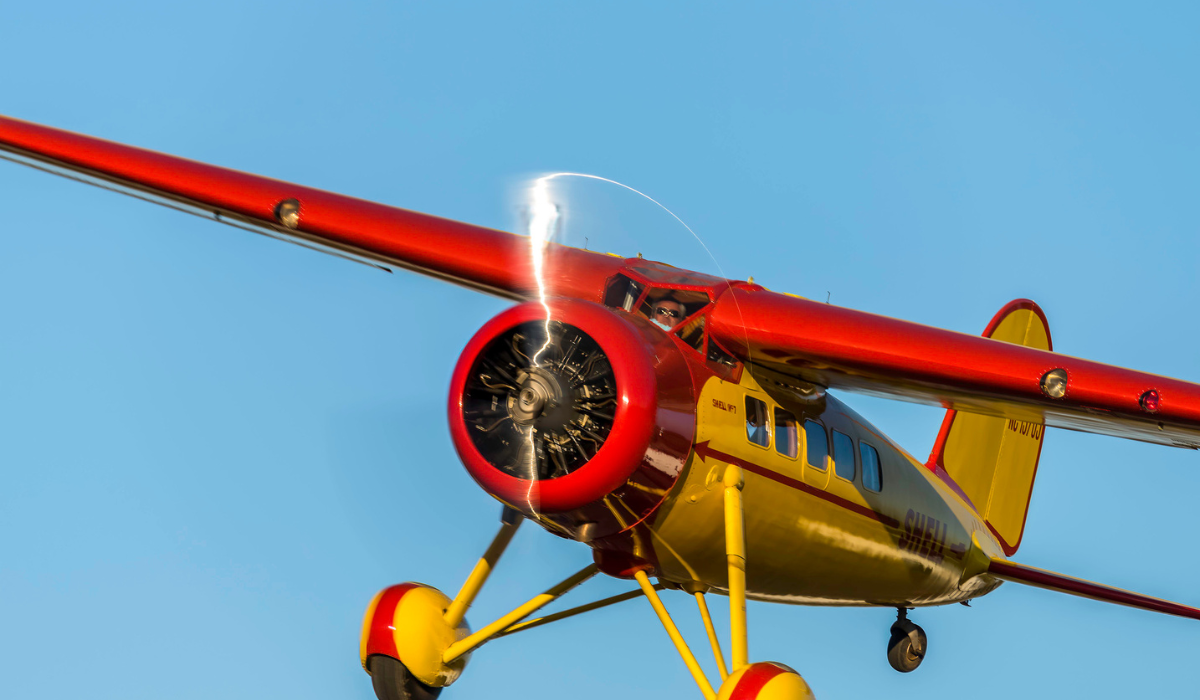
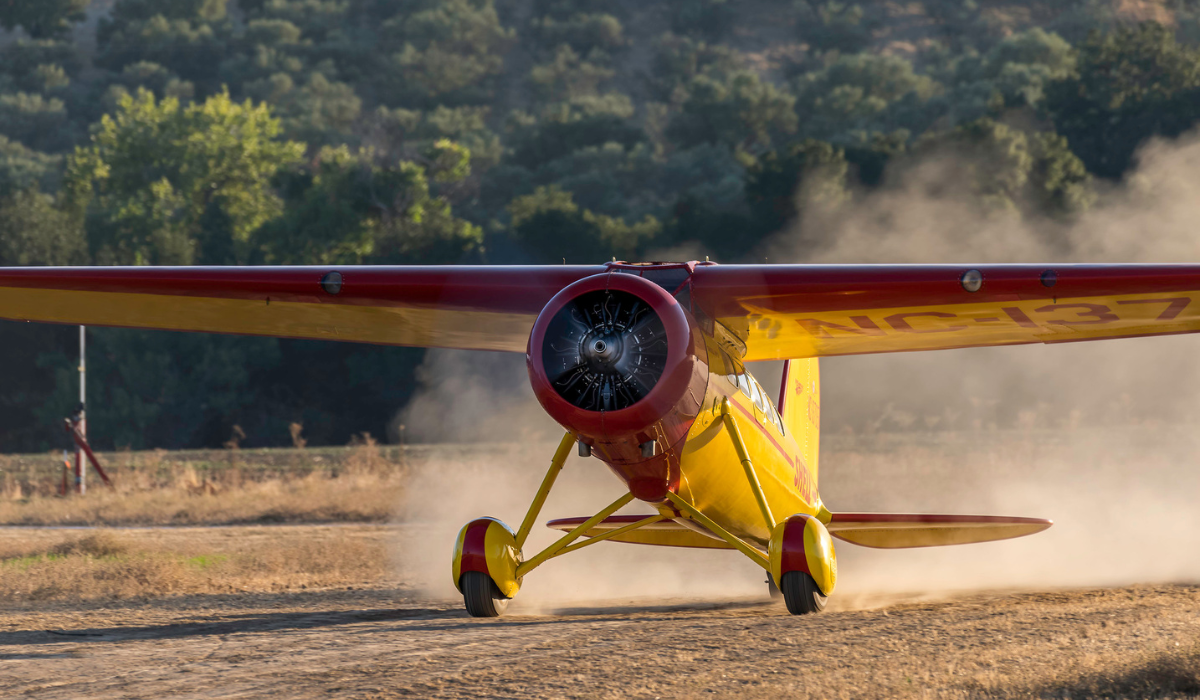
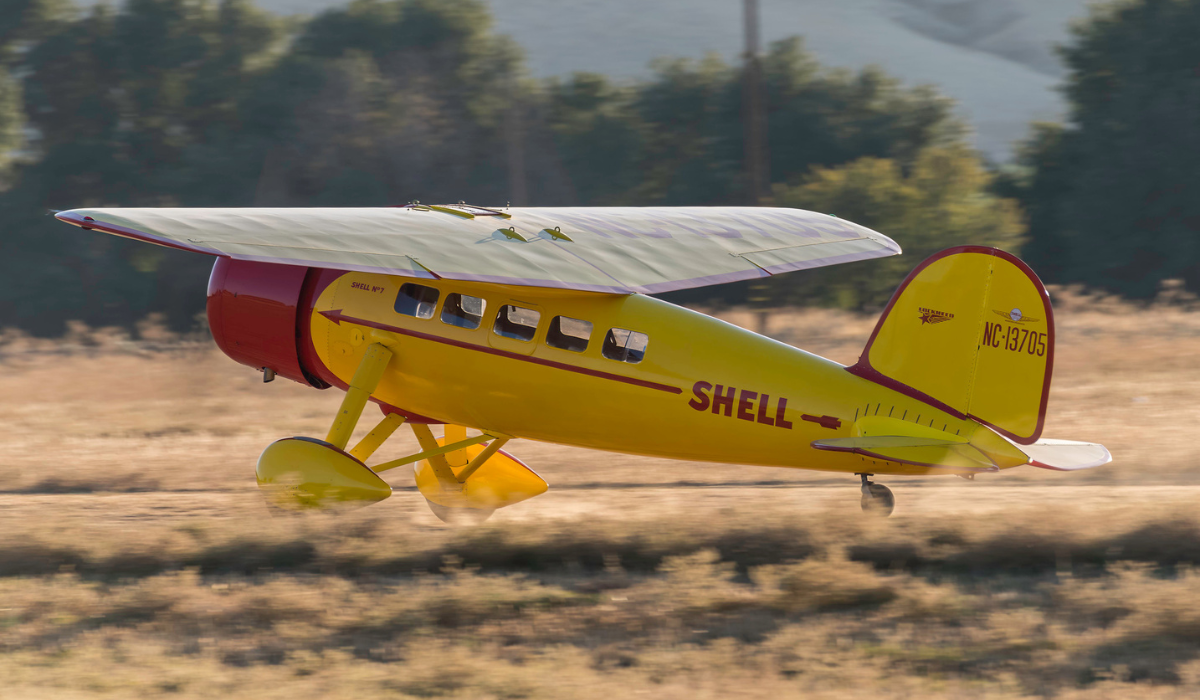
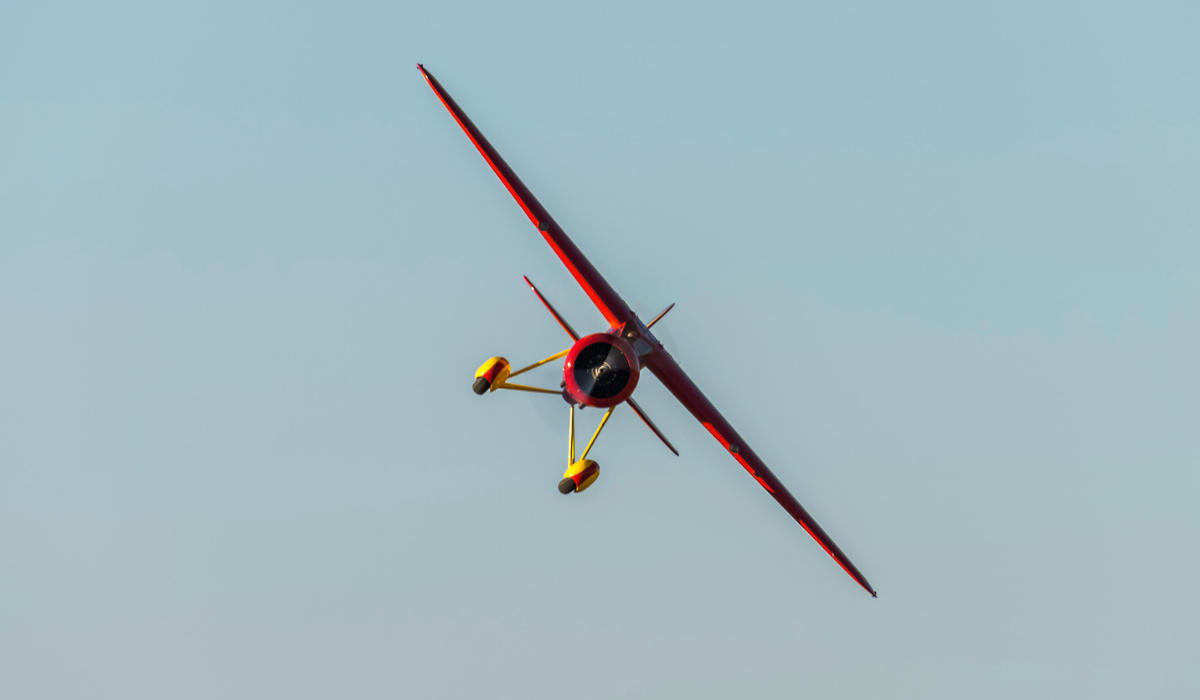
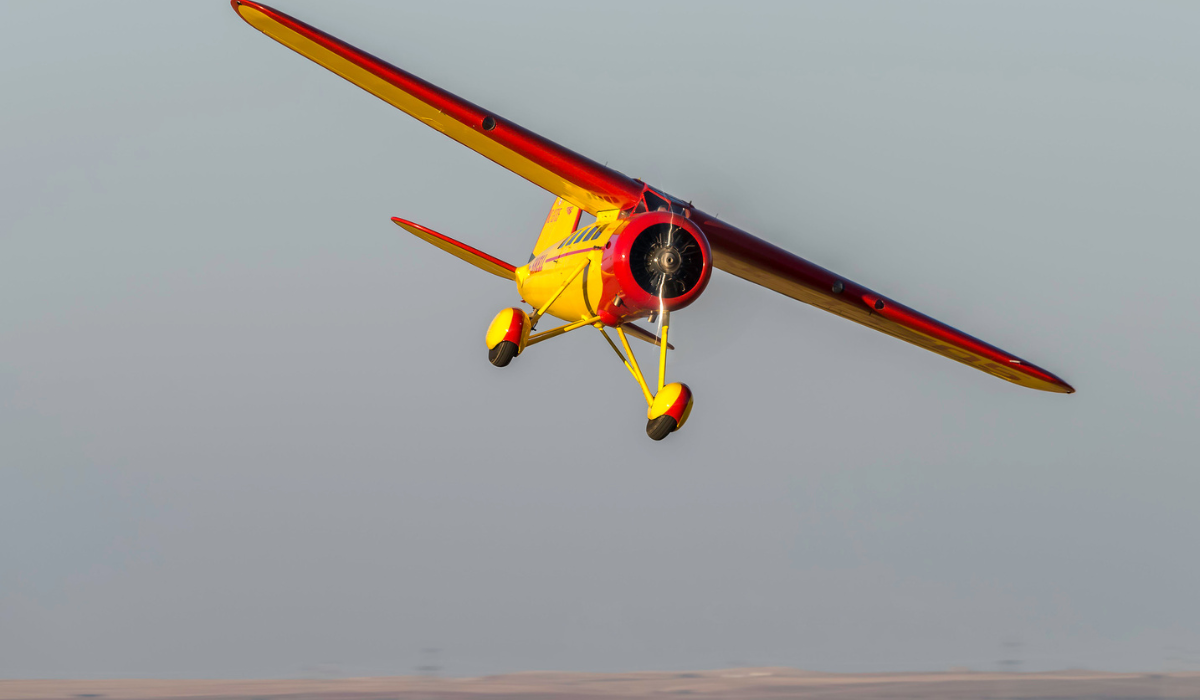
This particular aircraft is a 7 person capacity model 5C and was sold to Shell Aviation (Shell Oil) in 1933 and painted yellow and red as Shell No. 7. It was flown by the famous test pilot and war hero Jimmy Doolittle during its time with Shell. It was later acquired as a restoration project in 1988 by well-known aircraft collector John Desmond. Though close, Desmond wasn’t able to complete the restoration effort before his passing. It was later acquired by the Ala Doble Flying Collection in 2019 where it resides and is now in flying condition at the Ala Doble Flying Ranch.

Tour the Cockpit!
Front Cockpit View
Rear Passenger Cabin
1933 Lockheed Vega
- Registration: 13705
- Serial number: 203
- Crew: 1
- Capacity: 6 passengers
- Empty weight: 2,565 lbs
- Gross weight: 4,500 lb
- Fuel capacity: 160 US gal (130 imp gal; 610 L)
- Powerplant: Pratt & Whitney R-1340C Wasp “snap cap” 9-cylinder air-cooled radial piston engine, 450 hp
- Propellers: 2-bladed fixed-pitch ground adjustable Hamilton Standard propeller
- Performance:
- Maximum speed: 185 mph
- Cruise speed: 165 mph
- Range: 725 mi
- Service ceiling: 19,000 ft
- Rate of climb: 1,300 ft/min
Dimensions:
- Length: 27 ft 6 in
- Wingspan: 41 ft
- Height: 8 ft 6 in